


The Original of South Sea Pearls
South Sea pearls are prized not only for their beauty, but for the story behind them. This guide reveals their origins, their journey from sea to jewellery, and the enduring qualities that make them truly exceptional.
Pearling History
Australia
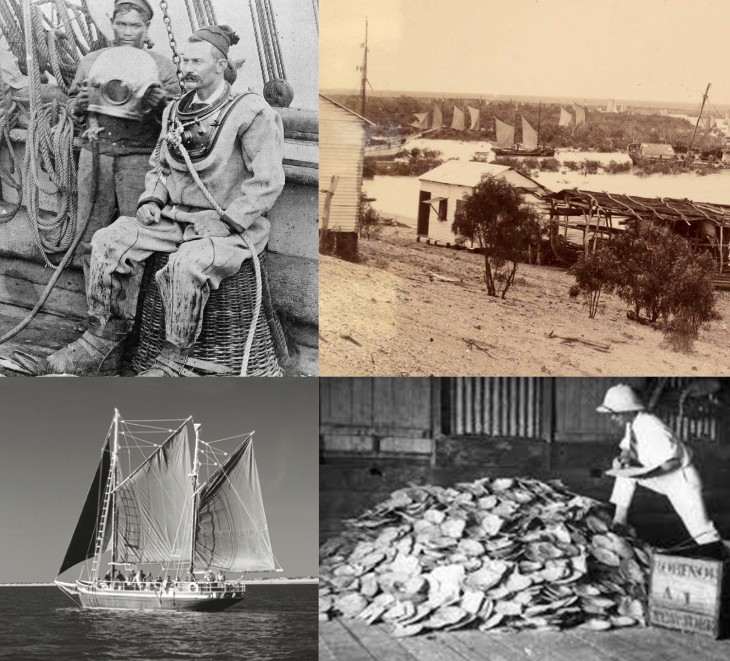
Pearling along the north-west coast of Western Australia began in the late 1800s, when large quantities of mother-of-pearl from the Pinctada maxima oyster were discovered in the region.
In the early days, the industry was driven by shell exports, with divers paid according to the amount of shell they recovered. Broome, founded in 1883, soon became the centre of this trade and played a defining role in Australia’s pearling history.
Many of the divers were Japanese and worked in extremely demanding conditions, wearing vulcanised canvas suits, heavy bronze helmets, and lead-weighted boots. This early industry helped establish Australia as one of the world’s most important South Sea pearling regions.
Tahiti
In Tahiti, the story of pearl farming began with the collection of wild black-lipped pearl oysters found throughout the atolls and islands of French Polynesia. Divers originally gathered these oysters from the surrounding waters before cultured pearl farming emerged in the 1960s.
By the 1980s, pearl cultivation had expanded on a much larger scale, laying the foundation for the modern Tahitian pearl industry and its reputation for producing some of the world’s most distinctive pearls.
Pearl Farming Today
Australia
Cultured pearl farming in Australia began in the 1950s and has since developed into one of the world’s most respected pearling industries.
Australia is uniquely placed, with an abundant supply of pearl shell sourced both from wild oyster beds and from carefully managed hatchery programs.
Together, wild and hatchery shell support a thriving industry and contribute to an annual export market worth around $160 million.
Tahiti
In Tahiti, pearl oysters are grown from post-larval spat collected during the natural spawning season. These oysters are carefully nurtured and are typically ready for cultivation once they reach at least two years of age.
Today, French Polynesia is home to hundreds of pearl farms, from small family-run operations to some of the largest pearl producers in the world.
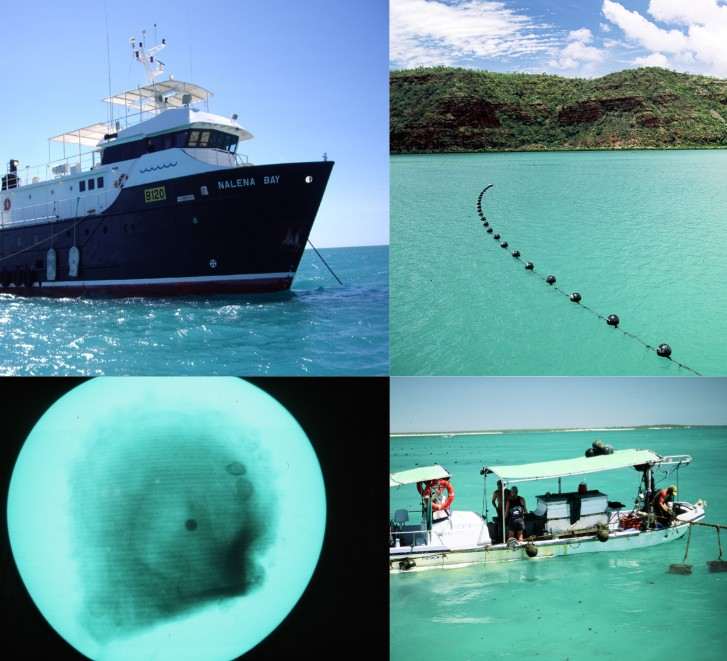
The Pearl Cultivation Process
Behind every South Sea pearl is a careful cultivation process shaped by time, skill, and nature. It is this journey that makes each pearl so rare, precious, and admired.
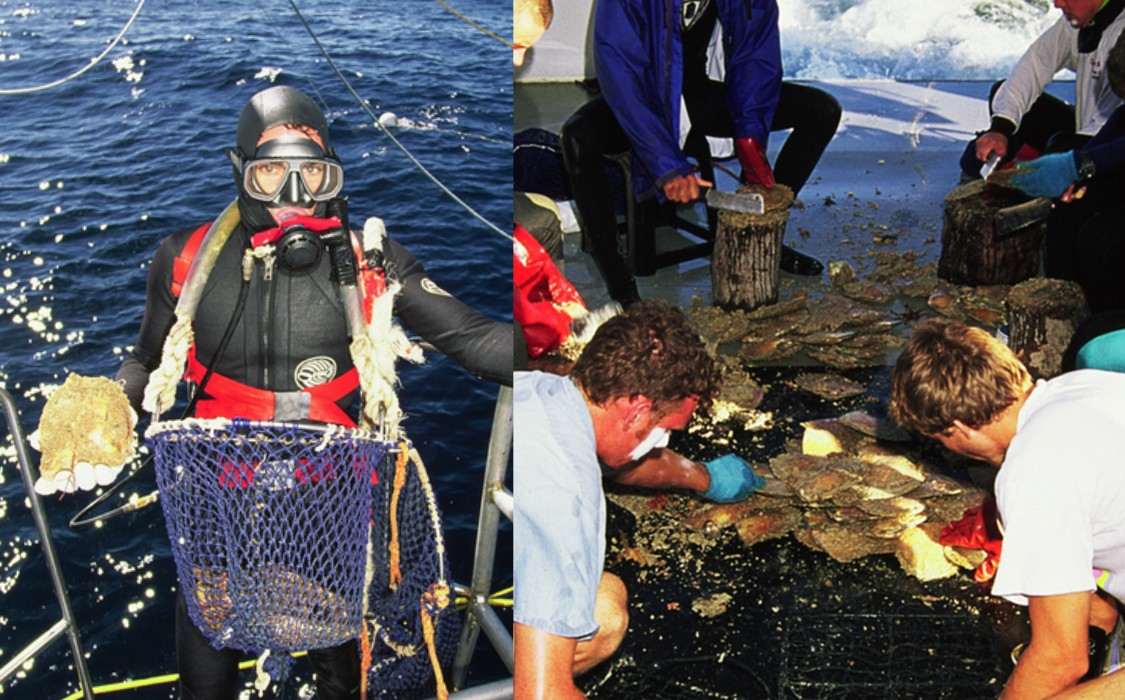
STAGE 1 – DIVING & SOURCING THE PEARL OYSTER
The cultivation of a pearl begins with wild oysters being collected by divers (or by using a hatchery). They are cleaned and placed in netting panels to rest for about six weeks ahead of being seeded.
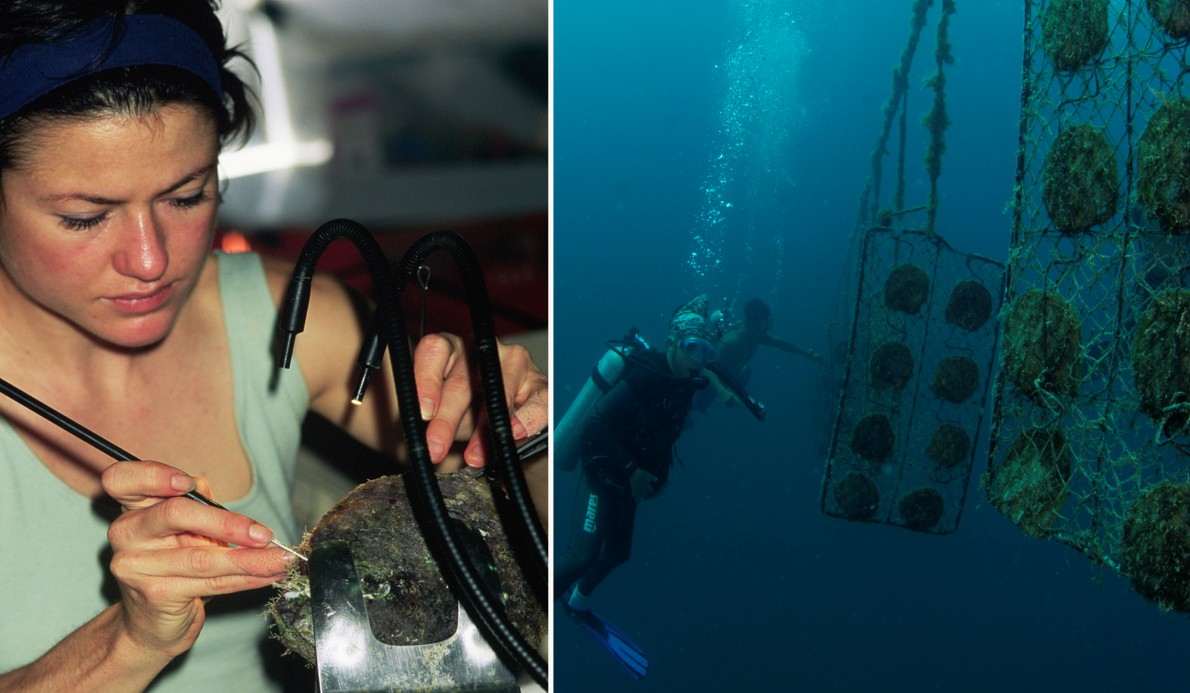
STAGE 2 – SEEDING & GROWING
From here the oysters are seeded by expert technicians to encourage the growth of a pearl. They are then returned to the deep and left to thrive between fortnightly cleaning cycles over at least two years which promotes the health of the oyster and the even coverage of the nacre (the concentric layers that form around the nucleus).
On rare occasions, the oyster may reject the implantation of the nucleus and in turn, will grow a pearl commonly known as a “keshi” or a seedless pearl. This means there is no nucleus inside. The keshi is rarely round but can be very baroque to smooth oval and drop shapes.
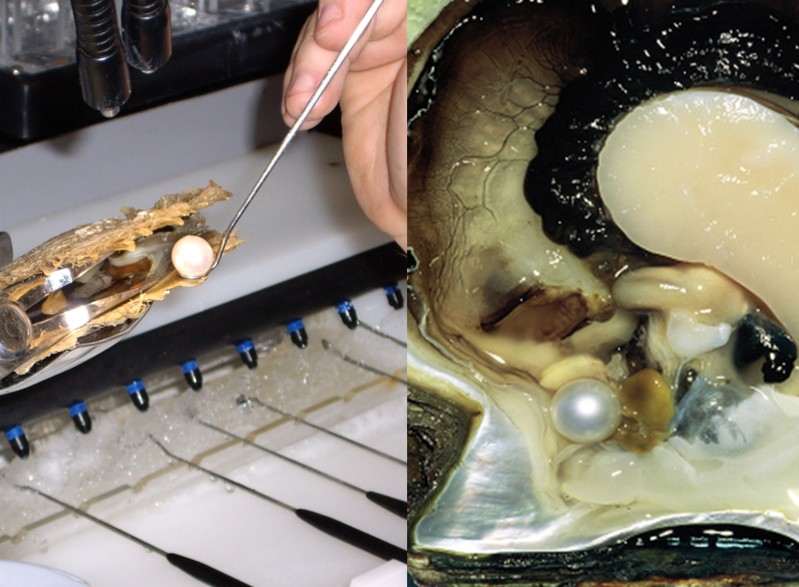
STAGE 3 – HARVESTING
Pearl harvesting takes place on large pearling vessels, where technicians carefully extract pearls from living oysters; if healthy, the oysters can be reseeded and returned to the ocean for two years further growth. As each pearl forms uniquely within a living organism, the harvest is a moment of excitement and mystery, with no two pearls ever the same.
STAGE 4 – GRADING
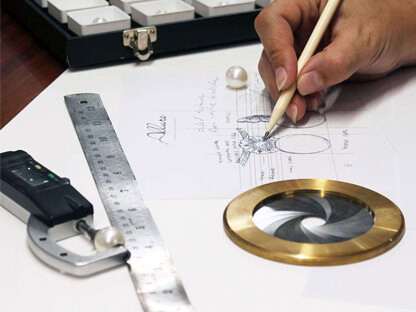
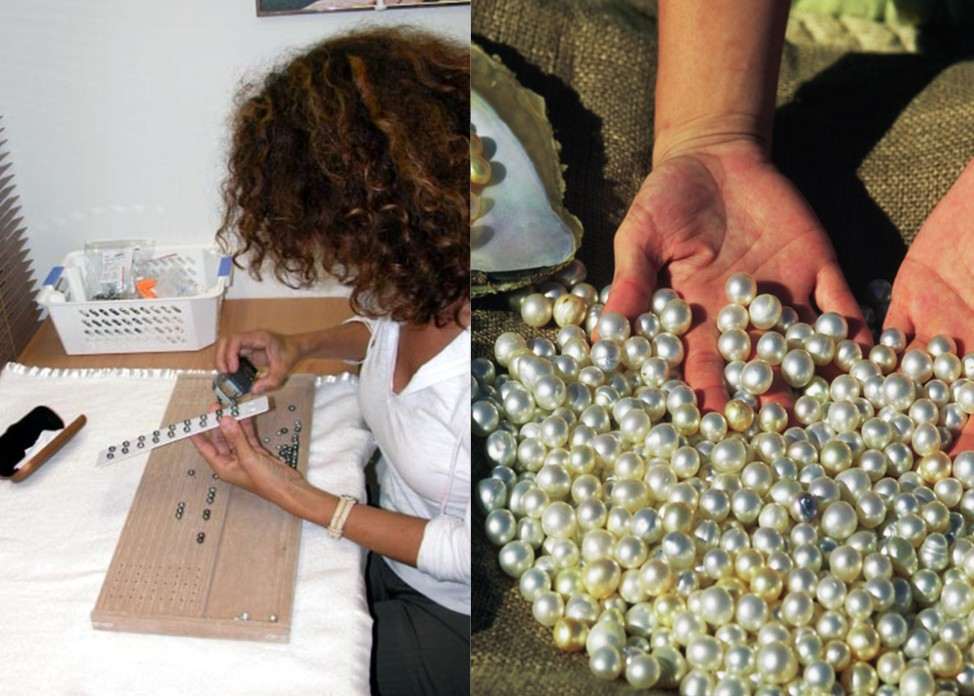
Pearl grading is a meticulous, manual process relying solely on human expertise to assess each pearl’s quality. Allure ensures only high-lustre pearls are selected and expertly pairs them by matching lustre, shape, size, complexion and colour.
Natural vs Cultured Pearls
Are cultured pearls real?
Yes, cultured pearls are real, actual pearls, but they are formed through human intervention, specifically the implantation of a nucleus and tissue graft into the oyster to initiate pearl growth.
Fake or imitation pearls would refer to beads or objects that are made to look like pearls but are in fact a different material altogether, typically plastic, shell, or some type of composite.
What is the difference between natural and cultured pearls?
Natural pearls are found, not grown. Only one in every 10,000 oysters may grow a jewellery grade pearl. Natural pearls have not been harvested commercially for over 100 years, so almost all pearls on the market today used for jewellery are cultured pearls grown on pearl farms.